More Human, Empathetic, and Safer Spaces to Talk About Mental Health Across the Region
Published on July 14, 2026 by GlasswingAcross hospitals, schools, and community spaces throughout the region, people are creating more human, empathetic, and supportive spaces to talk about mental health.
Today, we want to share the stories of people like Alfredo, Daily, and Nixon, who are helping make that change possible. Whether by listening to a patient who has just received a life-changing diagnosis, creating safe spaces in classrooms to talk about emotions and anxiety, or supporting others through difficult circumstances, they are demonstrating that a more compassionate way of caring for one another is possible.
Through SanaMente, alongside local governments, community organizations, and local actors, thousands of frontline workers are strengthening tools for self-care, psychosocial support, and trauma-informed care to transform how their institutions respond to emotional well-being.
Today, more than 80,000 people trained through SanaMente have impacted approximately 6.8 million people through their frontline work. Behind those numbers, we find extraordinary people and their stories, who are illustrating, from different spaces, that another way of supporting people is possible.
“Now we work together so no one has to go through it alone”
In Comayagua, Honduras, Alfredo works as an HIV educator and counselor at a health center. For years, he accompanied people receiving difficult diagnoses, listening to fears, anxieties, and questions that often go far beyond medical care.
“You don’t just deliver diagnoses — you also listen to the patients’ stories and fears,” he says.
SanaMente training helped him recognize something that had previously gone unnoticed: the emotional impact this work also had on him and his colleagues.
“Sometimes you think you just have to endure it,” he recalls. “But I realized I also needed to pay attention to what I was feeling.”
That learning transformed not only his personal well-being, but also the way the health center supports people.
Alfredo remembers the case of a 19-year-old who received a positive HIV diagnosis. Before, the process was quick and strictly clinical. Today, things work differently.
“First, I talk with the patient and give them space to speak, explain what they’re feeling, and ask all the questions they need to ask. Then the psychologist comes in, and only afterwards, the doctor,” he explains. “Now we work together so no one has to face that moment alone.”
The change emerged after the team collectively reflected on what they learned through SanaMente, showing how small institutional changes can deeply impact the experience of those seeking support.
When care also means listening
For Daily, a physician in the Pain and Palliative Care Unit at a public hospital in El Salvador, supporting patients with advanced illnesses means much more than providing medical care.
“Many times, patients are seen as having ‘no hope left.’ But for those of us who work in palliative care, every life and every process still matters,” she says.
Although she had always dreamed of becoming a doctor, she never imagined she would find her calling supporting people through some of the most difficult moments in their lives. Along the way, SanaMente’s tools also transformed the way she provides care.
“Today, my vision of medical care is shaped by active listening and compassion,” she explains. “I want patients to know they can find support in our unit.”
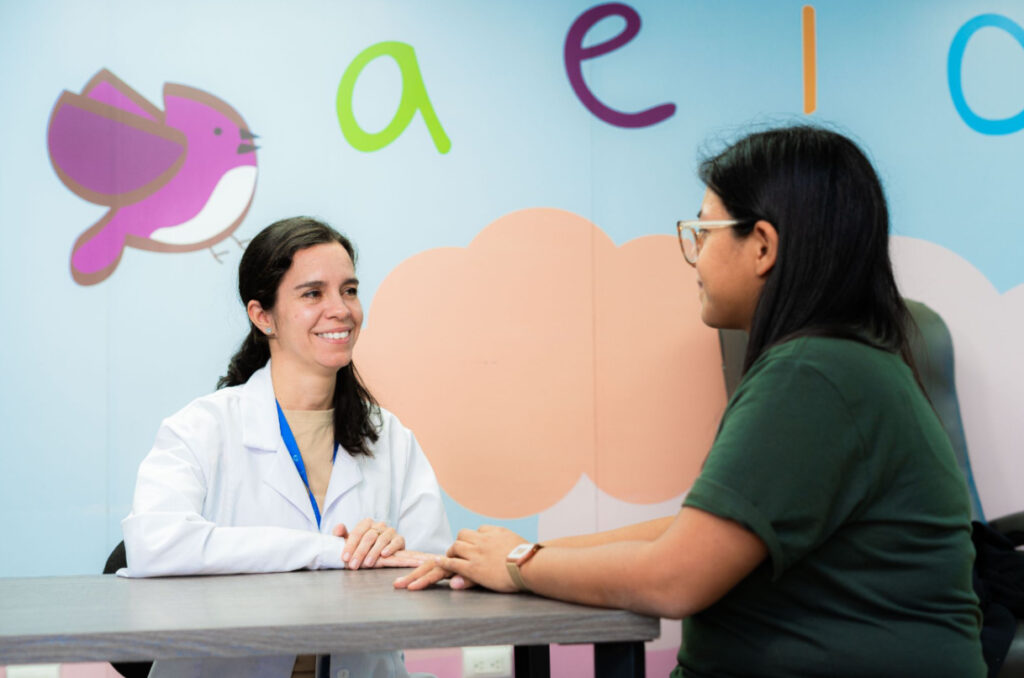
Thanks to the trauma-informed care approach, Daily has acquired tools to support people with empathy and dignity, even in emotionally demanding situations.
Her story reflects how mental health can also transform the quality of care and the relationship between institutions and communities.
Mental health is also transforming classrooms
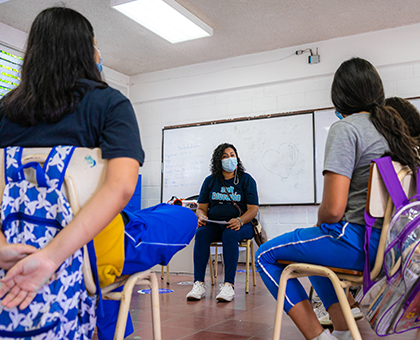
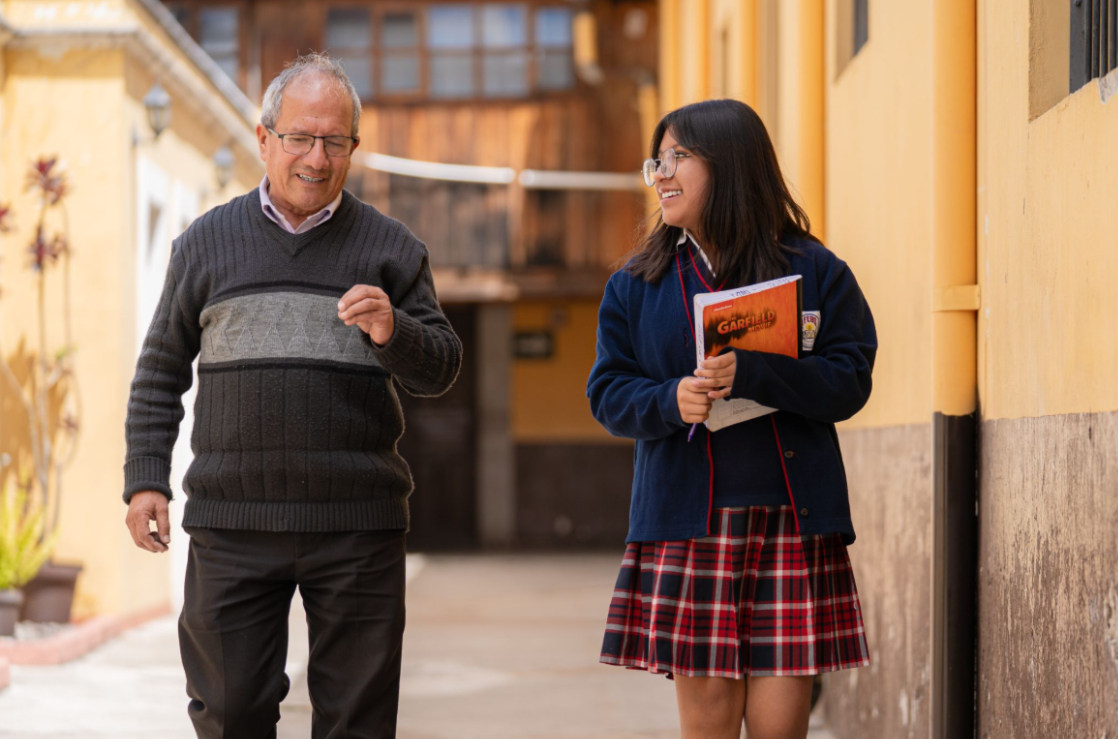
In Guatemala, Nixon coordinates nearly 700 teachers across 30 municipalities in the department of San Marcos as part of the Academic Program for Teacher Professional Development (PADEP).
His work has allowed him to closely observe how emotional well-being also affects educational communities.
“I’ve seen how many students carry family problems, violence, bullying, or the pressure of social media,” he explains. “A wrong gesture or word can leave deep marks on them.”
After participating in SanaMente, Nixon began incorporating emotional regulation, conflict prevention, and active listening tools into every workshop, school visit, and teacher training space.
“I understood the importance of promoting environments where communication happens with clarity and trust,” he shares. “I also discovered the value of giving second chances.”
Today, beyond supporting educational processes, he promotes conversations about mental health and well-being as an essential part of the educational work he leads.
“My commitment now is to raise awareness, prevent harm, and teach people how to manage emotions and conflict,” he says. “I truly believe every teacher and every student can always find a new opportunity to learn, grow, and heal.”
Conversations that open possibilities
SanaMente seeks to contribute to the construction of trauma-informed care ecosystems where people can find safer, more human, and empathetic spaces to talk about mental health.
Talking about mental health can be the beginning of a new way of supporting one another. Every safe space, every conversation, and every act of listening has the potential to transform not only one person, but also the communities and systems around them.
And across different corners of the region, people like Alfredo, Daily, and Nixon are already showing that this change is possible.